lunes, 24 de octubre de 2011

Photography, between the technician and the artist ....


"View from the Window at Le Gras" 
The first photograph taken
by Niépce in 1826 Nicéphore

After the weekend, during which time I have had many moments to think about different aspects of photography, and reading a little about and others, I have again raised, as I think at some point it has a photographer, to what extent the picture, depends on the technique, and even that since this technique is no longer craft to become art.

According to the dictionary of the Royal Spanish Academy of Language, art in its second meaning is: "Expression of human activity through which he expresses a personal vision and selfless real or imagined plays with plastic resources, linguistic or sound. "and according to this technique is the same dictionary: "A set of procedures and resources serving a science or an art."


Daguerreotype of
Edgar Allan Poe (1848)
taken by W.S. Hartshorn
Analyzing the expression of art, I do believe that photography is, on the other hand I also believe that by either photograph or other means of expression all require techniques. perhaps the picture is more technical art as it is impossible to conceive that if the cameras.

It is for this number of reasons, for which I can not understand the conflict that even today there are between these two visions, while it is true that over time the picture has been simplified, especially in its most technical aspects slowly growing community have been doing a lot more complex. But after all they are two aspects are complementary.


Photo by José María Mellado
What I actually raises the simplification of the technique is that it is artistic photography, but he who is able to do, ie a picture a technically correct, may be a good card, or an excellent document, but an artistic , we may come to convey a message.

It is true that today, the photographic images populate the Internet, but few of these images offer us new aspects of communication, the truth is that in the network, replicas abound that one copies and effects. On the other hand, it is true that the network has access to the thousands of creative work being developed, so in my humble opinion, the creation as an act and photography as part of creation, we offer a message art can be considered depending on the intent of those who stand behind the technical apparatus.

Finally, a quote by an author that I consider of great influence, both in the photograph, as in the art world.

"Copying is human, to create is divine" 
 Man Ray                                           .

viernes, 21 de octubre de 2011

Serial Experiment Lain: philosophy disguised as entertainment


Again we are through Friday, and to relieve some stress of the week, I talk about a range of only thirteen chapters, although it is known, I believe that at least in Spain is poorly understood.

Serial Experiment Lain, is a series of 1998, which shows us a world that is not so different from ours, the truth is to do a short synopsis of the series, is complicated, without disclosing important parts of the plot at I may quote the synopsis that makes this series filmaffity.


"Lain Iwakura, an introverted girl of 14 years, only relates to the Network for that reason does not know about e-mails that are circulating about a classmate who has just committed suicide, Chisa Yomoda. A week after the suicide, Lain received this e-mail from Chisa: "I would like you, at least you, know that I'm alive. My spirit is here, and on the Web I have found God." Upon receipt, Iwakura Lian began his research on the Internet, trying to find an explanation for this incredible message ..." Filmaffinity


There are many interesting aspects of this care would be, first the plot, like spectators at a certain moment we are completely lost, until they reach the end of the thirteen chapters and have a global vision of the plot, this, that in it may seem a defect is the opposite, because when we finish watching the series, which we ourselves begin to connect all the data we had.

Two other aspects that stand out as notable, are on the one hand, care graphic aspect, which I consider a good direction, and the soundtrack. As for the visuals, with certain moments in which the number is closer to the video creation that cinematic concept, separates the two realities that are experienced in the series. Also include the images in terms of careful composition, something, perhaps appreciably less now, but at the time to leave me quite marked, with an aesthetic, clean and balanced on one hand and yet another confusing and noisy, which mixing will happen gradually as chapters, to make us understand the message of the series.

As for the soundtrack included the great work, not only for excellence in electronic issues, if not in the small details that sound throughout the series will permeate the small moments in this world, near future, where technology and connection dominates everything. As I said before, this is more normal now, at the time of his 1998 performance, it was more a theory than a reality. Even with the passage of time, I think to do this series is a great investment, and after thirteen chapters, we'll stay, safe, wanting to know more.


jueves, 20 de octubre de 2011

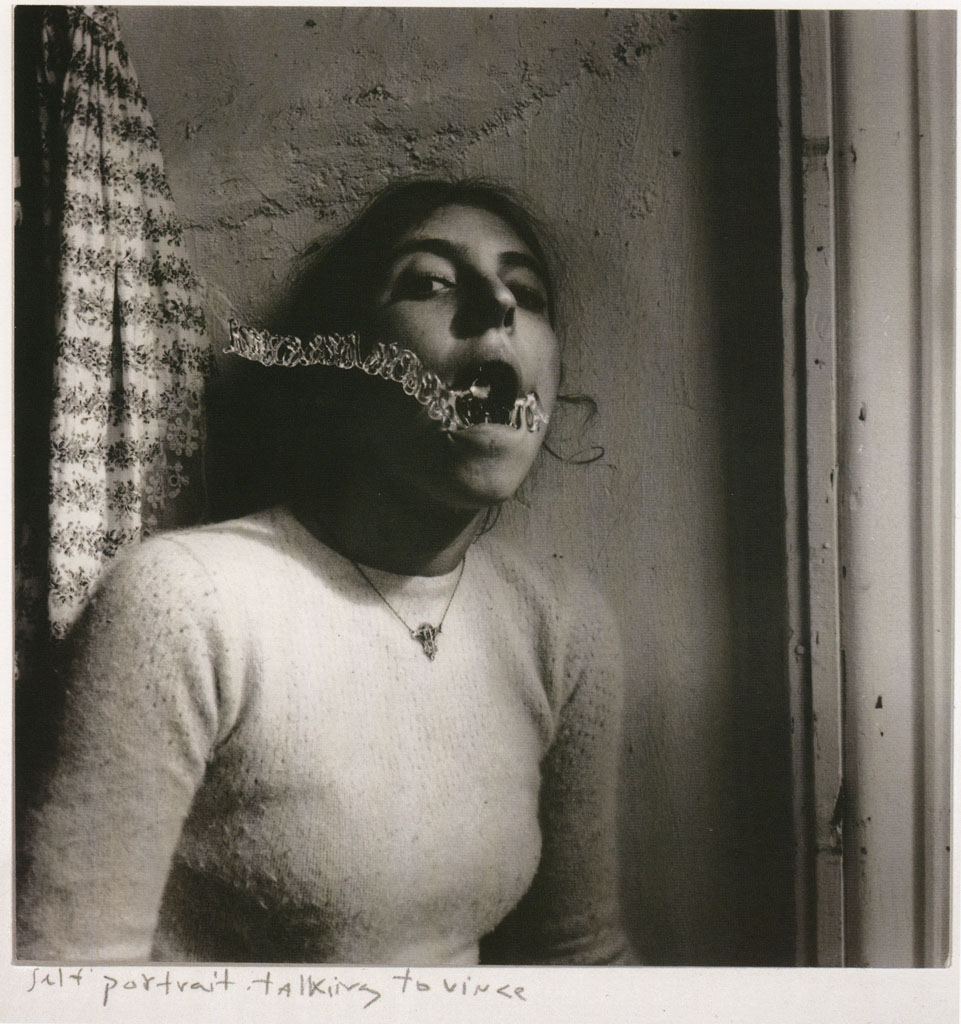
Francesca Woodman


Self-portrait "Untitled"
Francesca Woodman
In the line of authors who one way or another have come to the idea of ​​fear, we have to Francesca Woodman, a photographer known for having a very personal representation of what can be understood by inner fears, namely the fear that this photographer offers us is an internalized fear and seeks to make relevant staff across the image, is both intimate fear, since she is the protagonist of his images, and these were not intended for exhibition, it is more a detailed catalog of personal fears has been designed as a visual diary.

"Untitled"
Francesca Woodman
Here I present a brief biography of this interesting and creative and a few images that I consider a little bit will be asked about our own fears.

Francesca Woodman was born on April 3, 1958 in Denver (Colorado). Born into an artistic family, his parents received his early influences into art, so that, from small, conceptualized not only as a way of life, but rather as a way of thinking.

"Untitled"
Francesca Woodman
Francesca's childhood was spent in a Colorado town and a village in the Tuscan countryside frequented by artists and exponents of the high society of Florence. His interest in photography arose very early, with only 13 years, began with his early work, and adopting a characteristic style, almost always black and white photographs, square format, giving priority to lighting, to through it, get to focus on one main subject (and usually only one) in the scene.

"Untitled"
Francesca Woodman

Between 1975 and 1979 he studied at the Rhode Island School of Design in Providence, and was accepted into the Honors Program that allowed him to live for a year in school facilities in Palazzo Cenci in Rome. There was identified with Surrealism and Futurism, which has since gained a presence in his photographs, as well as the decline, represented in the bare walls and ancient artifacts also began to populate his work.
"Untitled"
Francesca Woodman

He moved to New York in 1979, where he wanted to make photographic career. Portfolios sent some fashion photographers, but their efforts were rewarded. Due to its failure and a broken sentimental, Woodman enters a depression. On January 19, 1981 Francesca Woodman committed suicide by jumping out a window on the Lower East Side of Manhattan. Before killing himself, in a letter to a school friend, Sloan Rankin, wrote the following words. "My life here is like a very old sediment in a cup of coffee and would rather die young leaving various accomplishments ... instead of going hastily erasing all these delicate things ...."


Article extracted from Wikipedia

If you want to know more about the world of Woodman here think you have two links of interest.
"Vida y muerte de Francesca Woodman" article in the Spanish newspaper El Pais
Victoria Miro Gallery where we can see some of your images.

miércoles, 19 de octubre de 2011

digital photography .... simplifying the process?


Detail Leica camera negative

The beginning digital photography, it was assumed, a more accessible way of photography, but in my opinion, nothing has changed, only the name of the process. It is something that most fans have a hard time adjusting to the idea, that is, at first, it seems that simply using a digital camera and post processing program, we have the full kit digital photography. Nothing is further from reality, because in order to obtain copies of certain quality, we have to relearn the whole process involved.

When the photograph was analog, we needed to know the negative and the developer, depending on the utility and final intention of the image, Today we are obliged to know the color profile of both the camera and the profile of output space of the image. At the time of positivism, we should know what type of developers we used, the type of light from the enlarger and the paper, apart from the obvious change of process and nomenclature, we must continue to control as much or more variables that before. It is now necessary for a quality copy, have calibrated your monitor and printer, the latter difficult if we have to print out, because in some places they are called professionals, or even bother to calibrate the plotter.


Persona eliminada de

una fotografia soviética.

Nor is it a retrograde technique, and I think this is important because it is how the end came the idea to the viewer. I must also say that digital photography has certainly simplified certain processes, such as retouching, understanding this as the multiple composition, the elimination of elements in the image, or clearing skin blemishes. While this has provided a clear way, it is true that especially in the beginning of these types of software has come to abuse of such effects. Is this, what is making gradually lose the uniqueness of its photo, and that today is very common that a person sees an image and before considering what is real is raised which will be retouched and which no. In fact laws have been proposed in several states to limit the retouching of images in advertising. This makes me wonder where it tends toward the photographic image, if it were to lose that aura of reality that makes it unique and if you end the first theoretical reason and photography will again be an imitation of painting. Although the photographers, artists continue to explore the possibilities of reality, public opinion is increasingly further from this line.

Image ion litio belonging to the blog, in his article "El retoque fotográfico en la antigua Unión Soviética"

martes, 18 de octubre de 2011

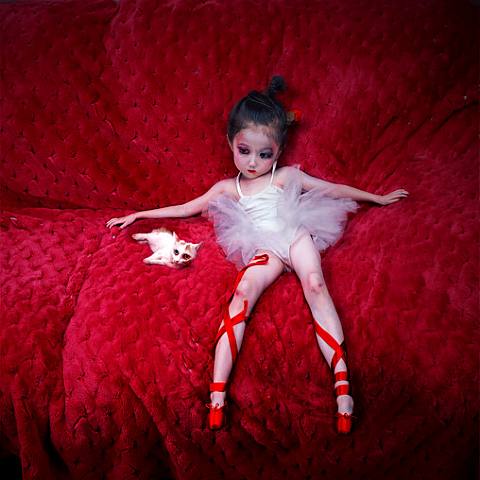
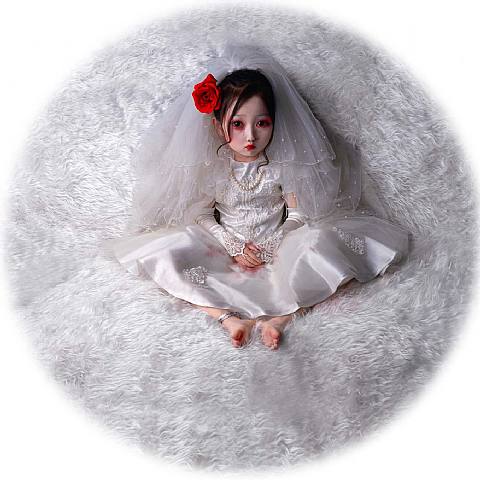
Peng Zhang a dark look of innocence


Zhang Peng is a Chinese maker born in 1981, currently lives and works in Beijing. His work is very personal and it shows that it is the beginning was inspired to paint more for other forms of expression. Later he began to develop his photographic work. Heir to the Japanese animation cut more than Chinese, their images do not leave any viewer indifferent.

It's that mix between innocence and melancholy drama that attracts attention is the images that we proposed. As girls and models commonly used by digital retouching makes it resemble characters more worthy of a comic manga a real person, it is this disparity, the subject that we can use their models to see more like fragile dolls as human beings makes this author has gained some notoriety, especially in the East and America.
Another of the highlights of the images of Zhang Peng, the color at a time like the present where the image tends to become less devices and for cold tones, in a way away from the viewer and thus give an external perspective, this author is supported by great contrasts, both in form and color, being very important in his works the red and white. These colors are often stained the spaces where they develop scenes, scenes that print compositionally relaxed but stress through the action.

Another form of fear, perhaps arguably more heirs of certain cinematic clichés, such as corn Boys, Damian and The Village of the Damned. Yet it seems to me interesting to transfer these lines of argument to the world of photography, we can consider half brother of the film, this seems another example of feedback between the different forms of creative expression.


lunes, 17 de octubre de 2011

Prezít svuj zivot (teorie a praxe) - Surviving Life (Theory and Practice)


Original movie poster

Today, after the weekend came with renewed energy after this brief but intense break, I want to share a movie which I at least I thought it deserves a mention.

The film to which I refer is as you have guessed from the title "Surviving Life (Theory and Practice)" the film is a comedy psychoanalyst as well says the author, co-produced between the Czech Republic and Slovakia, the plot Evzen tells the story of a married man who one night dreams that flirts with a girl named Eve. The dream turned into an obsession, Evzen is led to visit a psychiatrist and then starts an amalgam of universes: memories of childhood that develops in therapy, living with his wife and his recurring dream in which his Eva romance progresses. Nominated for best animated feature at the festival in Sitges the tape features a visual aesthetic, close as many of surrealism, I personally think closest to the given, in a manner similar to some of the animations of the Monty Pithon.

It is certainly a film that will not leave indifferent, and a movie recommendation, which can be surprised by the riskiness of the conduct and history, of course a very acceptable recommendation and not say one way to start discovering these little gems often are not of European cinema.


Synopsis extracted from filmaffinity
Articulo en español